2008年12月12日星期五

Bose headphones


Background

Acoustic Noise-Cancellation Development
The idea of personal noise protection by actively controlled headphones was originally documented in a 1960 Russian patent application. In the United States, the idea for active noise cancellation for helicopter and aircraft pilots was patented by Dr. Lawrence J. Fogel as early as the mid 1950s U.S. Patent 2,866,848 , U.S. Patent 2,920,138 , U.S. Patent 2,966,549 and Canadian patent 631,136. According to Bose, the company started noise-cancellation involvement after Dr. Amar Bose went on a 1978 flight to Europe, utilized the headphones provided during the flight only to conclude that he couldn't really enjoy the sound with the roar of engines in the background.".
In 1986, Bose applied their noise-cancellation technology to develop headphones to protect the hearing of pilots participating in the first non-stop around-the-world flight.
One source notes that "nearly simultaneously, the US company Bose and Sennheiser in Germany presented active headsets for aircraft pilots," citing a 1986 American Society of Mechanical Engineers paper about the Bose product and a 1988 Funkschau (see de:Funkschau) paper about the Sennheiser. Bose's first noise-cancelling headsets were released to the public in 1989.
After about 10 years of research and development Bose released their first consumer level noise reducing headphones for pilots called the Aviation Headset, released in 1989. The current revision provides active equalization as well as active noise reduction.
Like all such technology, it mixes an inverted sample of the ambient sound outside the headset with the sound that reaches the inside of the headset, partially cancelling out the noise. Active (battery-powered) noise cancellation is never perfect, and is better at low frequencies than at high frequencies.
As with all active noise cancellation technologies, it requires a source of power—a small battery inside the headset—to perform the cancellation.

Bose TriPort Earcup Structure
The "triport" earcup structure has three miniature air ducts that allow the drivers to make larger excursions without resulting in distortion. The design was first used in the Bose Aviation Headset X "Magellan" released in 1998 and is now used in all of the company's headphone products.
All Bose headphones are closed-air to provide passive noise reduction.
QuietComfort Headphones

Bose QuietComfort 2 Headphones "Second Edition"

The Bose QuietComfort 2 Second Edition was introduced August 2005. The earcup color was changed to silver, "acoustic equalization" was added, and the earcups now incorporate magnetic shielding.
The QC2 is powered by a single AAA battery inside the right earcup with a built-in attenuator. The cord can be detached at the user's discretion for stand-alone noise cancellation.
JAL provides Bose QuietComfort 2 Headphones for use by passengers in premium flight classes on some long-haul flights.
A cellphone adapter has been made available to users for the second edition and QC3 headphones.

Bose QuietComfort 3 Headphones

Bose released the QuietComfort 3 Acoustic Noise Cancelling Headphones on June 15, 2006, the company's first pair of supra-aural (on-the-ear) headphones.
Bose states that, although the supra-aural configuration provides less passive blocking than their circumaural headphones, the QC3s have the same amount of total noise reduction as the QC2s due to improved active noise cancellation. In 2006, they were the first headphones to receive a Sound & Vision Editor's Choice award.
The QC3 appears to achieve its active noise cancellation performance at the expense of stability of causing an unpleasant squealing noise as described on these following flaws:
Pressure on the earpads, such as that caused by the user leaning their head against a flat surface.
Manually pressing on the headphones.The QC3 uses memory foam to conform to the ear and provide a good acoustic seal without uncomfortable pressure.
The QC3's earcups are too small to contain a AAA battery, and are powered by a rechargeable lithium-ion battery instead. Bose claims a battery life of twenty hours, about half that of the QC2.
Bose QC3 headphones are provided by American Airlines for use by passengers in premium flight classes on some long-haul flights.On 11 January 2008, Engadget revealed that Bose was going to release a Bluetooth adapter for the QC3. No information was given on a QC2 Bluetooth version.

Bose TriPort Headphones

Bose Around-Ear (AE) Headphones

Introduced in 2002and originally called the TriPort headphones, they were renamed the Bose Around-Ear (AE) Headphones in October 2006. The Bose Around-Ear headphones don't have active noise cancellation (as opposed to the QuietComfort 2 headphones). For a short time, the Bose Around-Ear headphones were also sold with a Bose-badged CD player as a part of the company's "TriPort CD Music System".
A New York Times reviewer commented that "the research effort paid off: the [Bose Around-Ear Headphones] has very full sound and works equally well with all types of music," but judged a competitor's headset, priced at less than half the price of the AE's, to be "just as comfortable and just as light, and the sound it produced was just as full and clear."A few months after the release of the iPhone in 2007 Bose redesigned the AE's headphone jack to make it iPhone compatible

Bose On-Ear (OE) Headphones
The Bose On-Ear headphones were introduced on October 12, 2006. The Bose On-Ear is similar to the Bose QuietComfort 3 Headphones, but without active noise cancellation. The cord is detachable; both 43 and 16-inch cords are available.
Shortly after the release of the iPhone in 2007 Bose redesigned the OE's headphone jack on the detachable cords to make it iPhone compatible.

Bose In-Ear (IE) Headphones

The Bose In-Ear headphones were introduced on October 12, 2006 as the company's first earbud product. Three eartips of different sizes are included. Bose claims that the IE's silicone tips are shaped to fit the ear's natural curves more closely.

The TriPort airducts in this product consist of two air ducts in the large grille, and one "stand-alone" air duct on top of each earbud.
After customer complaints stating that the "silicone ear tips become detached under certain conditions" and that the "stability of the headphones during certain activities, such as exercise, could be improved", Bose setup a website to send redesigned ear tips and a new clip and the lanyard for free.

IE v2
On March 15th, 2007 Bose redesigned the headphones which fixed many of the issues with the silicone ear tip stability. The cord for the redesigned headphones is now black and white to signify the change.

IE v3
Shortly after the release of the iPhone, on October 11, 2007, Bose redesigned the IE's for a 3rd time. They made the headphone jack iPhone compatible and removed the circuit board from the headphone jack and moved it up the cord. Bose also included a clip and a lanyard on this revision as well.

Bose Aviation Headset X "Explorer"
The original Bose Aviation Headset X ("ten") was released in 1998. This was Bose's first product using "triport" technology, and according to Bose was lighter in weight, used less headband force, had better sound, and better noise reduction than Bose's previous aviation headset.
Aviation Headset X was voted #1 by Professional Pilot magazine's headset preference survey five years in a row from 2000 to 2005.
The July 2003 "Explorer" model added improvements in the "down cable" assembly (including the boom microphone and battery pack).
Bose offers an accessory for this model which allows the headphone to be permanently installed in the aircraft and eliminates the need for battery power, and offers trade-up programs for earlier models.

Combat Vehicle Crewman Headset
In 1993 Bose introduced an active noise reduction system for use by crews in United States Army armored vehicles.
At noise levels of 115dBA SPL, Bose noise cancelling headsets improves speech intelligibility scores to 95%, compared to 80% for conventional headsets.At low frequencies, Bose headsets are much more effective in attenuating noise than passive noise reduction headsets. A binaural talk-through feature allows crewmen to talk directly to each other without removing their headsets.
This product is not available to civilian consumers.

Bose QuietComfort and American Airlines
American Airlines provides QuietComfort 3 headphones to first- and business-class passengers on some long-haul flights. Bose has made American Airlines several special edition versions of the QuietComforts starting with the original QC1 that had blue ear cups and an American Airlines logo on them. American Airlines became the first airline to offer the QuietComforts.
American Airlines allows each of their First and Business Class passengers to use a pair of the QuietComfort 3 on long-haul flights to Europe, Asia, deep South America and select First Class transcontinental flights.
On 1 July 2006JAL started to offer QuietComfort 2 headphones to First class customers on some flights
Air-India also offers QuietComfort 3 headphones to its Premium Class customers on some long haul flights.

Awards
2000 to 2005 Aviation Headset X was voted #1 by Professional Pilot magazine's headset preference survey five years in a row.
2004 Red Dot Award for product design on QuietComfort 2
2006 QuietComfort 3 were the first headphones to receive a Sound & Vision Editor's Choice award.
2006 Potentials Magazine Gold Star Award] for the QuietComfort 3

2007 Red Dot Award for product design] on QuietComfort 3
Criticism
Critics have said:
The QuietComfort headphone models have a high price tag.
The QuietComfort headphones are incapable of unpowered operation, unlike some competitive products which operate passively, without noise reduction, when unpowered.
The QuietComfort 3 have "earcan" instability and has half the battery life of the QuietComfort 2.
Early versions of the TriPort headphones were fragile and subject to headband and earcup cracks.
in Late 2005 TriPort Headphones were re-designed to address these problems with a P3 label on the package. TriPorts are now called the Bose Around-Ear Headphones and have these improvements included.
Some complaints about the early production In-Ears have been that the "silicone ear tips become detached under certain conditions" and that the "stability of the headphones during certain activities, such as exercise, could be improved", Bose setup a website to send redesigned ear tips and a new clip and the lanyard for free.
The Bose in-ear headphones are only audio headphones and have no noise cancellation technology.

Hydraulic cylinder


Operation
Hydraulic cylinders get their power from pressurized hydraulic fluid, which is typically oil. The hydraulic cylinder consists of a cylinder barrel, in which a piston connected to a piston rod moves back and forth. The barrel is closed on each end by the cylinder bottom (also called the cap end) and by the cylinder head where the piston rod comes out of the cylinder. The piston has sliding rings and seals. The piston divides the inside of the cylinder in two chambers, the bottom chamber (cap end) and the piston rod side (rod end) chamber. The hydraulic pressure acts on the piston to do linear work and motion.
A hydraulic cylinder is the actuator or "motor" side of this system. The "generator" side of the hydraulic system is the hydraulic pump which brings a fixed or regulated flow of oil into the system. Mounting brackets in the form of flanges, trunnions, feet and clevisses are mounted to the cylinder body. The piston rod also has mounting attachments to connect the cylinder to the object or machine component that it is pushing. Trunnion mounts are sometimes fitted along the body of a hydraulic cylinder.
By pumping hydraulic oil to the bottom side of the hydraulic cylinder, the piston rod starts moving upward. The piston pushes the oil in the other chamber back to the reservoir. If we assume that the oil pressure in the piston rod chamber is zero, the force on the piston rod equals the pressure in the cylinder times the piston area (F=PA).
If the oil is pumped into the piston rod side chamber and the oil from the piston area flows back to the reservoir without pressure, the pressure in the piston rod area chamber is Pull Force/(piston area - piston rod area). In this way the hydraulic cylinder can both push and pull.

Parts of a hydraulic cylinder
A hydraulic cylinder consists of the following parts:

Cylinder barrel
The cylinder barrel is mostly a seamless thick walled forged pipe that must be machined internally. The cylinder barrel is ground and/or honed internally.

Cylinder Bottom or Cap
In most hydraulic cylinders, the barrel and the bottom are welded together. This can damage the inside of the barrel if done poorly. Therefore some cylinder designs have a screwed or flanged connection from the cylinder end cap to the barrel. (See "Tie Rod Cylinders" below) In this type the barrel can be disassembled and repaired in future.

Cylinder Head
The cylinder head is sometimes connected to the barrel with a sort of a simple lock (for simple cylinders). In general however the connection is screwed or flanged. Flange connections are the best, but also the most expensive. A flange has to be welded to the pipe before machining. The advantage is that the connection is bolted and always simple to remove. For larger cylinder sizes, the disconnection of a screw with a diameter of 300 to 600 mm is a huge problem as well as the alignment during mounting.

Piston
The piston is a short cylinder shaped metal component that separates the two sides of the cylinder barrel internally. The piston is usually machined with grooves to fit elastomeric seals. These seals are often O-rings or U-cups. They prevent the pressurized hydraulic oil from passing by the piston to the chamber on the opposite side. This difference in pressure between the two sides of the piston cause the cylinder to extend and retract. Piston seals vary in design and material according to the pressure and temperature requirements that the cylinder will see in service.

Piston Rod
The piston rod attaches to the piston and extends from the cylinder through the rod end head. In double rod end cylinders, the actuator has a rod extending from both sides of the piston and out both ends of the barrel. The piston rod connects the hydraulic actuator to the machine component doing the work. This connection can be in the form of a machine thread or a mounting attachment such as a rod clevis or rod eye. These mounting attachments can be threaded or welded to the piston rod or, in some cases, they are a machined part of the rod end.


Rod Gland
The cylinder head is fitted with seals to prevent the pressurized oil from leaking past the interface between the rod and the head. This area is called the rod gland. It often has another seal called a rod wiper which prevents contaminants from entering the cylinder when the extended rod retracts back into the cylinder. The rod gland also has a rod bearing. This bearing supports the weight of the piston rod and guides it as it passes back and forth through the rod gland. In some cases, especially in small hydraulic cylinders, the rod gland and the rod bearing are made from a single integral machined part.

Other parts
Cylinder bottom connection
Seals
Cushions
A hydraulic cylinder should be used for pushing and pulling only. No bending moments or side loads should be transmitted to the piston rod or the cylinder. For this reason, the ideal connection of a hydraulic cylinder is a single clevis with a spherical ball bearing. This allows the hydraulic actuator to move and allow for any misalignment between the actuator and the load it is pushing.

Hydraulic Cylinder Designs
There are primarily two styles of hydraulic cylinder construction used in industry: tie rod style cylinders and welded body style cylinders.

Tie Rod Cylinders
Tie rod style hydraulic cylinders use high strength threaded steel rods to hold the two end caps to the cylinder barrel. This method of construction is most often seen in industrial factory applications. Small bore cylinders usually have 4 tie rods, while large bore cylinders may require as many as 16 or 20 tie rods in order to retain the end caps under the tremendous forces produced. Tie rod style cylinders can be completely disassembled for service and repair.
The National Fluid Power Association (NFPA) has standardized the dimensions of hydraulic tie rod cylinders. This enables cylinders from different manufacturers to interchange within the same mountings.

Welded Body Cylinders
Welded body cylinders have no tie rods. The barrel is welded directly to the end caps. The ports are welded to the barrel. The front rod gland is usually threaded into or bolted to the cylinder barrel. This allows the piston rod assembly and the rod seals to be removed for service.


Welded body cylinders have a number of advantages over tie rod style cylinders. Welded cylinders have a narrower body and often a shorter overall length enabling them to fit better into the tight confines of machinery. Welded cylinders do not suffer from failure due to tie rod stretch at high pressures and long strokes. The welded design also lends itself to customization. Special features are easily added to the cylinder body. These may include special ports, custom mounts, valve manifolds, and so on.
The smooth outer body of welded cylinders also enables the design of multi-stage telescopic cylinders.
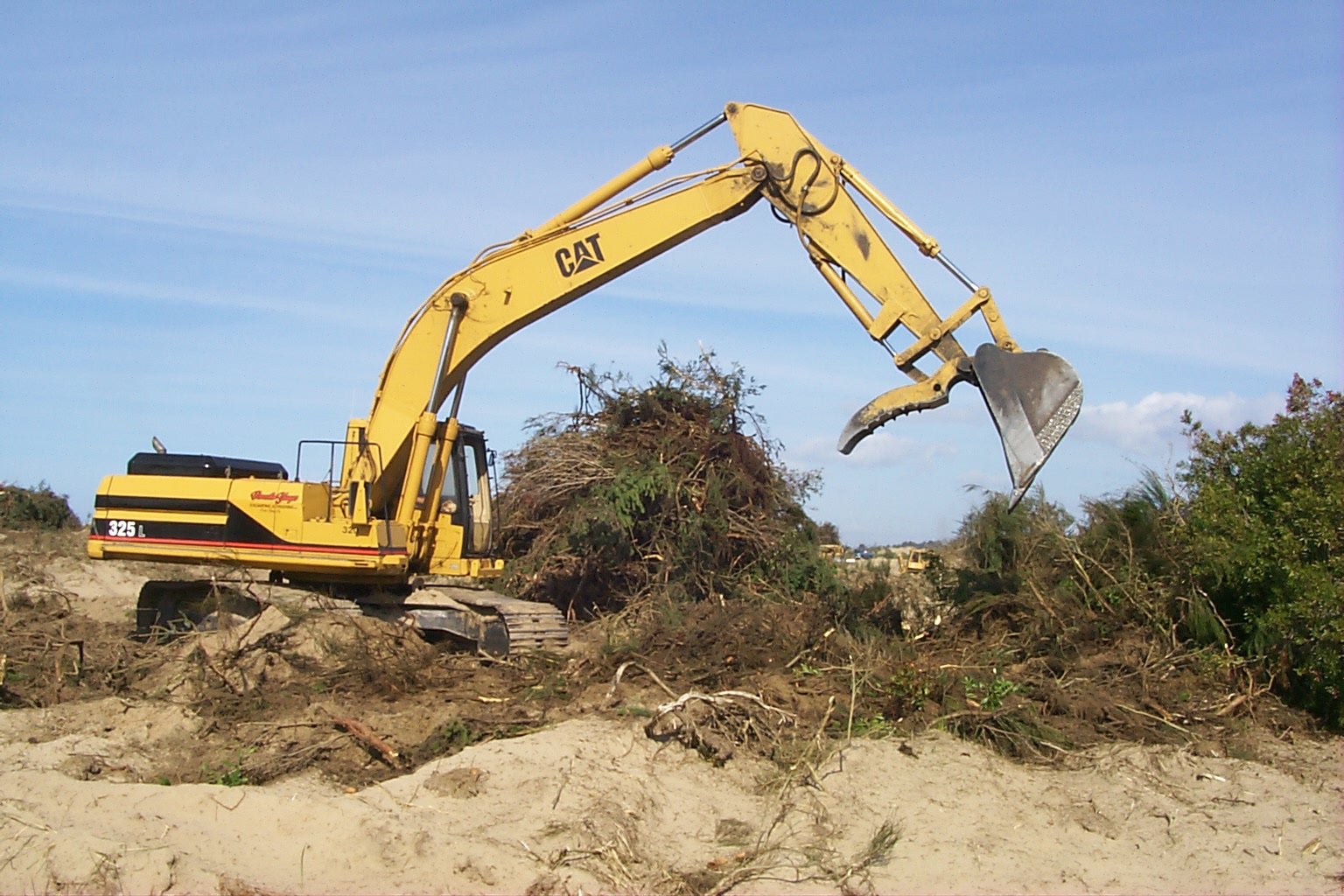
Welded body hydraulic cylinders dominate the mobile hydraulic equipmment market such as construction equipment (excavators, bull dozers, and road graders) and material handling equipment (fork lift trucks, telehandlers, and lift gates). They are also used in heavy industry such as cranes, oil rigs, and above ground mining.

Piston Rod construction
The piston rod of a hydraulic cylinder operates both inside and outside the barrel, and consequently both in and out of the hydraulic fluid and surrounding atmosphere.

Metallic coatings
Smooth and hard surfaces are desirable on the outer diameter of the piston rod and slide rings for proper sealing. Corrosion resistance is also advantageous. A chromium layer may often be applied on the outer surfaces of these parts. However, chromium layers may be porous, thereby attracting moisture and eventually causing oxidation. In harsh marine environments, the steel is often treated with both a nickel layer and a chromium layer. Often 40 to 150 micrometer thick layers are applied. Sometimes solid stainless steel rods are used. High quality stainless steel such as AISI 316 may be used for low stress applications. Other stainless steels such as AISI 431 may also be used where there are higher stresses, but lower corrosion concerns.

Ceramic coatings
Due to shortcomings of metallic materials, ceramic coatings were developed. Initially ceramic protection schemes seemed ideal, but porosity was higher than projected. Recently the corrosion resistant semi ceramic Lunac 2+ coatings were introduced. These hard coatings are non porous and do not suffer from high brittleness.

Lengths
Piston rods are generally available in lengths which are cut to suit the application. As the common rods have a soft or mild steel core, their ends can be welded or machined for a screw thread.

Texas City Refinery (BP)

Explosion
The U.S. Chemical Safety and Hazard Investigation Board investigating the incident found that operators had started-up the raffinate splitter tower (which separates light and heavy gasoline components) of the ISOM unit (which increases the octane rating of gasoline) and begun filling it with hydrocarbon fluid (i.e. gasoline components) without beginning timely discharge of product. The operators started the tower while ignoring open maintenance orders on the tower’s instrumentation system. An alarm meant to warn about the quantity of liquid in the unit was disabled.
Once the lack of draw-down from the tower was recognized, operators opened the discharge valve. This worsened the problem because the hot discharges passed through a heat-exchanger that pre-warmed incoming fluids. The resulting increase in temperature caused the formation of a bubble of vapor at the bottom of the raffinate tower that was already overly full and overheated. The tower burped the vapor bubble and the liquid above the bubble into the overhead relief tube of the tower.
The relief tube was connected to a disposal system for relieved discharges. The particular type of disposal system serving the raffinate tower was a blow-down drum with an atmospheric vent stack rather than an inherently safer and more environmentally sound knock-out tank and flare system.
Because of the overfilling of the raffinate splitter tower and the burp of both vapors and liquids to the undersized blow-down drum with an atmospheric vent stack, a “geyser like” emission of hot flammable vapors and liquids was expelled from the vent stack. The liquids traveled to a trailer 35 meters from the spill site, where most of the victims died. There was a white diesel pick-up truck parked not far away from the blow down stack. The driver got out and left the engine running; when the liquid arrived at the truck it flowed under it and the vapor entered the engine's air intake, causing the engine to rev. A short while after, a spark in the engine set off the explosion.

Aftermath
The CSB report found that BP had failed to heed or implement safety recommendations made before the blast. Among them were:
In 1995, a refinery belonging to Pennzoil suffered a disaster when two storage tanks exploded, engulfing a trailer and killing five workers. The conclusion was that trailers should not be located near hazardous materials. However, BP ignored the warnings, and they believed that because the trailer where most of the deaths happened was empty most of the year, the risk was low.
Between 1994 and 2004 at least eight similar cases occurred in which flammable vapors were emitted by a blow-down drum vent stack. Effective corrective action was not taken at the BP plant. In 1997, BP replaced the 1950’s era blow-down drum / vent stack that served the raffinate splitter tower with an identical system instead of upgrading to recommended alternatives that were safer. In 2002, engineers at the plant proposed replacing the blow-down drum/vent system as part of an environmental improvement initiative but this line item was cut from the budget due to cost pressures.
As a result of the accident, BP said that it would eliminate all blow-down drums/vent stack systems in flammable service. The CSB, meanwhile, recommended to the American Petroleum Institute that guidelines on the location of trailers be made.

Legal action
On February 4, 2008, U.S. District Judge Lee Rosenthal heard arguments regarding BP's offer to plead guilty to a federal environmental crime with a US$50 million fine. At the hearing, blast victims and their relatives objected to the plea, calling the proposed fine "trivial." So far, BP has said it has paid more than US$1.6 billion to compensate victims.The judge gave no timetable on when she would make a final ruling.

Subsequent Incidents
After the March explosion, three other major safety incidents occurred at the plant:
On 28-Jul-2005, a hydrogen gas heat exchanger pipe on the Resid Hydrotreater Unit ruptured, causing a release of hydrogen that erupted into a large fireball. One person received minor injuries. The Chemical Safety Board found that a contractor had accidentally switched a carbon steel pipe elbow with a low alloy steel elbow during maintenance, causing a failure mode known as “High Temperature Hydrogen Attack” (HTHA). The CSB found that BP had not informed the maintenance contractor that the elbows were different, the maintenance contractor had not used any procedure (such as tagging) to ensure that the elbows were re-installed into their original locations.
On August 10, 2005, there was an incident in a Gas-Oil Hydrotreater that resulted in a community order to shelter. This incident occurred when a hole developed in the bottom of a vale that handles high pressure gas and oil.
On January 14, 2008, William Joseph Gracia, 56, a veteran BP operations supervisor, died following head injuries sustained as workers prepared to place in service a water filtration vessel at the refinery's ultracracker unit.

Baker Panel
Following these additional safety incidents, on 17-Aug-2005 the CSB recommended that BP Headquarters commission an independent panel to investigate the safety culture and management systems at BP North America. The panel was led by former US Secretary of State James Baker III. The Baker panel report was released on January 16, 2007. The principal finding was that BP management had not distinguished between “occupational safety” (i.e. slips-trips-and-falls, driving safety, etc.) vs “process safety” (i.e. design for safety, hazard analysis, material verification, equipment maintenance, process upset reporting, etc.). The metrics, incentives, and management systems at BP focused on measuring and managing occupational safety while ignoring process safety. BP confused improving trends in occupational safety statistics for a general improvement in all types of safety.
Additionally the panel created and administered to all five of BP’s North American refineries an employee survey focusing on various aspects of “process safety”. From the survey results they concluded that the Toledo and Texas City plants had the worst process safety culture while the Cherry Point refinery had the best process safety culture. The survey results also showed that managers and white collar workers generally had a more positive view of the process safety culture at their plants when compared with the viewpoint of blue collar operators and maintenance technicians. The director of the Cherry Point refinery was promoted to oversee better implementation of process safety at BP.

CEO Retires
The head of BP (Lord John Browne) retired early amid the various problems plaguing BP in 2005 and 2006 (including the problems at Texas City, the shutdown of the Alaska pipeline, allegations of propane market manipulation, and start-up delays of the Thunderhorse project in the Gulf-of-Mexico).


electrical meter socket


exhaust pocket bike


Teak Garden Set


flexible duct connector


Intra Oral Camera


washed leather jacket


Knitting Machine Needles


chocolate fondue sets


zigzag sewing machine


Ladies' Casual Jacket


Citric Acid Anhydrous


christmas hanging ornament


rhinestone hair clips


Female USB Connector


CCTV DVR Card


Cast Iron Scrap


Steel Pipe Elbow


flanges forged steel


ear clip headphone


Ladies Casual Jacket


Backpacking Sleeping Bag


equipment ultrasonic welding


encapsulated o rings


rhinestone hair clip


Primary Lithium Battery


Magnetic Door Alarm

Cast iron


Production
Cast iron is made by remelting pig iron, often along with substantial quantities of scrap iron and scrap steel, and taking various steps to remove undesirable contaminants such as phosphorus and sulfur. Depending on the application, carbon and silicon content are reduced to the desired levels, which may be anywhere from 2% to 3.5% and 1% to 3% respectively. Other elements are then added to the melt before the final form is produced by casting.
Iron is most commonly melted in a small blast furnace known as a cupola (see blast furnace for more details). After melting is complete, the molten iron is removed or ladled from the forehearth of the blast furnace. This process was devised by the Chinese, whose innovative ideas revolutionized the field of metallurgy. Previously, iron was melted in an air furnace, which is a type of reverberatory furnace.

Varieties of cast iron

Grey cast iron

Main article: Grey iron
Silicon is essential to making grey cast iron as opposed to white cast iron. When silicon is alloyed with ferrite and carbon in amounts of about 2 percent, the carbide of iron becomes unstable. Silicon causes the carbon to rapidly come out of solution as graphite, leaving a matrix of relatively pure, soft iron. Weak bonding between planes of graphite lead to a high activation energy for growth in that direction, resulting in thin, round flakes. This structure has several useful properties.
The metal expands slightly on solidifying as the graphite precipitates, resulting in sharp castings. The graphite content also offers good corrosion resistance.
Graphite acts as a lubricant, improving wear resistance. The exceptionally high speed of sound in graphite gives cast iron a much higher thermal conductivity. Since ferrite is so different in this respect (having heavier atoms, bonded much less tightly) phonons tend to scatter at the interface between the two materials. In practical terms, this means that cast iron tends to “damp” mechanical vibrations (including sound), which can help machinery to run more smoothly.
All of the properties listed in the paragraph above ease the machining of grey cast iron. The sharp edges of graphite flakes also tend to concentrate stress, allowing cracks to form much more easily, so that material can be removed much more efficiently.
Easier initiation of cracks can be a drawback once an item is finished, however: grey cast iron has less tensile strength and shock resistance than steel. It is also difficult to weld.
Grey cast iron's high thermal conductivity and specific heat capacity are often exploited to make cast iron cookware and disc brake rotors.

Other cast iron alloys

With a lower silicon content and faster cooling, the carbon in white cast iron precipitates out of the melt as the metastable phase cementite, Fe3C, rather than graphite. The cementite which precipitates from the melt forms as relatively large particles, usually in a eutectic mixture where the other phase is austenite (which on cooling might transform to martensite). These eutectic carbides are much too large to provide precipitation hardening (as in some steels, where cementite precipitates might inhibit plastic deformation by impeding the movement of dislocations through the ferrite matrix). Rather, they increase the bulk hardness of the cast iron simply by virtue of their own very high hardness and their substantial volume fraction, such that the bulk hardness can be approximated by a rule of mixtures. In any case, they offer hardness at the expense of toughness. Since carbide makes up a large fraction of the material, white cast iron could reasonably be classified as a cermet. White iron is too brittle for use in many structural components, but with good hardness and abrasion resistance and relatively low cost, it finds use in such applications as the wear surfaces (impeller and volute) of slurry pumps, shell liners and lifter bars in ball mills and autogenous grinding mills, balls and rings in coal pulverisers and (conceivably?) balls for rolling-element bearings and the teeth of a backhoe's digging bucket (although the latter two applications would normally use high quality wrought high-carbon martensitic steels and cast medium-carbon martensitic steels respectively).
It is difficult to cool thick castings fast enough to solidify the melt as white cast iron all the way through. However, rapid cooling can be used to solidify a shell of white cast iron, after which the remainder cools more slowly to form a core of grey cast iron. The resulting casting, called a “chilled casting”, has the benefits of a hard surface and a somewhat tougher interior.
White cast iron can also be made by using a high percentage of chromium in the iron; Cr is a strong carbide-forming element, so at high enough percentages of chrome, the precipitation of graphite out of the iron is suppressed. High-chrome white iron alloys allow massive castings (for example, a 10-tonne impeller) to be sand cast, i.e., a high cooling rate is not required, as well as providing impressive abrasion resistance.
Malleable iron starts as a white iron casting, that is then heat treated at about 900 °C. Graphite separates out much more slowly in this case, so that surface tension has time to form it into spheroidal particles rather than flakes. Due to their lower aspect ratio, spheroids are relatively short and far from one another, and have a lower cross section vis-a-vis a propagating crack or phonon. They also have blunt boundaries, as opposed to flakes, which alleviates the stress concentration problems faced by grey cast iron. In general, the properties of malleable cast iron are more like mild steel. There is a limit to how large a part can be cast in malleable iron, since it is made from white cast iron.
A more recent development is nodular or ductile cast iron. Tiny amounts of magnesium or cerium added to these alloys slow down the growth of graphite precipitates by bonding to the edges of the graphite planes. Along with careful control of other elements and timing, this allows the carbon to separate as spheroidal particles as the material solidifies. The properties are similar to malleable iron but parts can be cast with larger sections.
Cast iron is melted in furnaces usually in half ton measures. The metal melted usually consists of discs and drums and its properties are changed by adding an inoculant. This alters the characteristics of the metal to various grades and between grey and SG iron.


Historical uses

Because cast iron is comparatively brittle, it is not suitable for purposes where a sharp edge or flexibility is required. It is strong under compression, but not under tension. Cast Iron was first invented in China (see also: Du Shi), and poured into molds to make weapons and figurines. Historically, its earliest uses included cannon and shot. In England, the ironmasters of the Weald continued producing these until the 1760s, and this was the main function of the iron industry there after the Restoration, though probably only a minor part of the industry there earlier.
Cast iron pots were made at many English blast furnaces at that period. In 1707, Abraham Darby patented a method of making pots (and kettles) thinner and hence cheaper than his rivals could. This meant that his Coalbrookdale Furnaces became dominant as suppliers of pots, an activity in which they were joined in the 1720s and 1730s by a small number of other coke-fired blast furnaces.
The development of the steam engine by Thomas Newcomen provided a further market for cast iron, since this was considerably cheaper than the brass of which the engine cylinders were originally made. A great exponent of cast iron was John Wilkinson, who amongst other things cast the cylinders for many of James Watt's improved steam engines until the establishment of the Soho Foundry in 1795.

Cast iron bridges

The major use of cast iron for structural purposes began in the late 1770s when Abraham Darby III built the Iron Bridge, although short beams had been used prior to the bridge, such as in the blast furnaces at Coalbrookdale. This was followed by others, including Thomas Paine, who patented one; cast iron bridges became common as the Industrial Revolution gathered pace. Thomas Telford adopted the material for his bridge upstream at Buildwas, and then for a canal trough aqueduct at Longdon-on-Tern on the Shrewsbury Canal.

The Pontcysyllte Aqueduct, Llangollen, Wales, viewed from the ground
It was followed by the Chirk Aqueduct and the Pontcysyllte Aqueduct, both of which remain in use following recent restorations. Cast iron beam bridges were used widely by the early railways, such as the Water street bridge at the Manchester terminus of the Liverpool and Manchester Railway. However, problems arose when such a bridge collapsed shortly after opening in 1846. The Dee bridge disaster was caused by excessive loading at the centre of the beam by a passing train, and many similar bridges had to be demolished and rebuilt, often in wrought iron. The bridge had been under-designed, being trussed with wrought iron straps, which were wrongly thought to reinforce the structure. The centres of the beams were put into bending, with the lower edge in tension, where cast iron is very weak. The best way of using cast iron was by using arches, so that all the material is in compression, where it is very strong. Nevertheless, cast iron continued to be used for structural support, until the Tay Rail Bridge disaster of 1879 created a crisis of confidence in the material. Crucial lugs for holding tie bars and struts had been cast integral with the columns, and they failed during the early stages of the accident. In addition, the bolt holes were also cast and not drilled, so that all the tension from the tie bars was placed on a corner, rather than being spread over the length of the hole. The replacement bridge was built in wrought iron and steel. Further bridge collapses occurred, however, culminating in the Norwood Junction rail accident of 1891. Thousands of cast iron rail under-bridges were eventually replaced by steel equivalents.

Buildings
Main article: Cast-iron architecture
Cast iron columns enabled architects to build tall buildings without the enormously thick walls required to construct masonry buildings of any height. This allowed tall buildings to have large windows, in large cities, manufacturing buildings and early department stores were built with cast iron columns to allow daylight to enter. Examples can be seen in New York City's SoHo Cast Iron Historic District. Architects also liked cast iron because slender cast iron columns could suppport the weight that would require thick masonry columns or piers, opening up floor space in practical building like factories, and sight lines in houses of worship and auditoriums.

Textile mills
Another important use was in textile mills. The air in these contained flammable fibres from the cotton, hemp, or wool being spun. As a result, textile mills had an alarming propensity to burn down. The solution was to build them completely of non-combustible materials, and it was found convenient to provide the building with an iron frame, largely of cast iron. This replaced flammable wood. The first such building was at Ditherington in Shrewsbury, Shropshire. Many other warehouses were built using cast iron columns and beams, although there were many collapses owing to faulty designs, flawed beams or overloading.
During the Industrial Revolution, cast iron was also widely used for the frame and other fixed parts of machinery, including spinning and later weaving machinery in the textile mills. Cast iron became a widespread material, and many towns had foundries producing machinery, not only for industry but also agriculture.


Home server

Operating systems
Home servers run many different operating systems. Enthusiasts who build their own home servers can use whatever OS is conveniently available or familiar to them, such as Windows Home Server, Linux, Solaris or BSD UNIX.

Home server scenarios
Home servers do not necessarily have to be easy to administer or use; it wholly depends on the home administrator (for example, a person in IT having a complex home network with a Windows domain). However, most of the home servers today do not offer any services to the public internet,and operate as simple media-oriented devices.Many are simply glorified NAS devices and other consumer devices to integrate TVs and gaming consoles with the PC and sometimes the internet.
Administration and configuration
Home servers often run headless, and can be administered remotely through a command shell, or graphically through a remote desktop system such as RDP, VNC, Webmin, or many others.
Some home server operating systems, such as Windows Home Server include a consumer focused graphical user interface for setup and configuration that is available on home computers on the home network (and remotely over the Internet via remote access). Others simply enable users to use native operating system tools for configuration.

Centralized storage
Home servers often act as network-attached storage providing the major benefit that all users' files can be centrally and securely stored, with flexible permissions applied to them. Such files can be easily accessed 24/7 from any other system on the network, provided the correct credentials are supplied. This also applies to shared printers.
Such files can also be shared over the internet to be accessible from anywhere in the world using remote access.
Servers running UNIX or Linux with the free Samba suite (or certain Windows Server products - Windows Home Server excluded) can provide domain control, custom logon scripts, and roaming profiles to users of certain versions of Windows. This allows a user to log on from any machine in the domain and have access to his/her "My Documents" and personalized Windows and application preferences - multiple accounts on each computer in the home are not needed.

Media serving
Home servers are often used to serve multi-media content, including photos, music, and video to other devices in the household (and even to the Internet; see Place Shifting and Orb). Using standard protocols such as DLNA or proprietary systems such as iTunes users can access their media stored on the home server from any room in the house. Windows XP Media Center Edition and Windows Vista can act as a home server, supporting a particular type of media serving that streams the interactive user experience to Media Center Extenders including the Xbox 360. Windows Home Server supports media streaming to Xbox 360 and other DLNA based media receivers via the built-in Windows Media Connect technology. Some Windows Home Server device manufacturers such as Hewlett Packard extend this functionality with a full DLNA implementation such as PacketVideo Connect.
On a Linux server, there are many free, open-source, fully-functional, all-in-one software solutions for media serving available. One such program is LinuxMCE, which allows other devices to boot off a hard drive image on the server, allowing them to become appliances such as set-top boxes. Asterisk, Xine, MythTV (another media serving solution), VideoLAN, SlimServer, and many other open-source projects are fully integrated for a seamless home theater/automation/telephony experience. Such services, if offered in a proprietary package,would cost around $100,000 (including hardware and tailored household programming).
Because a server is typically always on, it is often a more logical choice to put a TV tuner or radio tuner for recording broadcasts into a server, than it is to use e.g. a desktop for recording, as it allows recording to be scheduled at any time.
On an Apple Macintosh server (or peer-to-peer node), Front Row may be used.
Some home servers provide remote access to media and entertainment content.

Remote access
A home server can be used to provide remote access into the home from devices on the Internet, using remote desktop software and other remote administration software. For example, Windows Home Server provides remote access to files stored on the home server via a web interface as well as remote access to Remote Desktop sessions on PCs in the house. Enthusiasts often use VPN technologies as well.
On a Linux server, two popular tools are (among many) VNC and Webmin. VNC allows clients to remotely view a server GUI desktop as if the user was physically sitting in front of the server. A GUI need not be running on the server console for this to occur; there can be multiple 'virtual' desktop environments open at the same time. Webmin allows users to control many aspects of server configuration and maintenance all from a simple web interface. Both can be configured to be accessed from anywhere on the internet.
Servers can also be accessed remotely using the command line-based Telnet and SSH protocols.

Web serving
Some users choose to run a web server in order to share files easily and publicly (or privately, on the home network). Others set up web pages and serve them straight from their home, although this may be in violation of some ISPs terms of service. Sometimes these webservers are run on a nonstandard port in order to avoid the ISP's port blocking. Example web servers used on home servers include Apache and IIS.
Many other webservers are available; see Comparison of web servers.

Web proxy
Some networks have a HTTP proxy which can be used to speed up web access when multiple users visit the same websites, and to get past blocking software while the owner is using the network of some institution that might block certain sites. Public proxies are often slow and unreliable and so it is worth the trouble of setting up one's own private proxy.
Some proxies can be configured to block websites on the local network from being viewed if it is set up as a transparent proxy.

E-mail
Many home servers also run e-mail servers that handle e-mail for the owner's domain name. The advantages are having much bigger mailboxes and maximum message size than most commercial e-mail services. Access to the server, since it is on the local network is much faster than using an external service. This is also good for privacy as e-mails don't reside on an off-site server where they could possibly be viewed by disgruntled administrators.

BitTorrent
Home servers are ideal for utilizing the BitTorrent protocol for downloading and seeding files as some torrents can take days, or even weeks to complete and perform better on an uninterrupted connection. There are many command-line based clients such as rTorrent and web-based ones such as TorrentFlux available for this purpose. BitTorrent also makes it easier for those with limited bandwidth to distribute large files over the internet.

Gopher
An unusual service is the Gopher protocol, a hypertext document retrieval protocol which pre-dated the World Wide Web and was popular in the early 1990s. Many of the remaining gopher servers are run off home servers utilizing PyGopherd and the Bucktooth gopher server.

Home automation
Home automation requires a device in the home that is available 24/7. Often such home automation controllers are run on a home server.

Security monitoring
Relatively low cost CCTV DVR solutions are available that allow recording of video cameras to a home server for security purposes. The video can then be viewed on PCs or other devices in the house.
A series of cheap Universal serial bus-based webcams can be connected to a home server as a makeshift CCTV system. Optionally these images and video streams can be made available over the internet using standard protocols. This solution is usually cheaper,although not as compact as stand-alone IP cameras.

Family applications
Home servers can act as a host to family oriented applications such as a family calendar, to-do lists, and message boards.

IRC and instant messaging
Because a server is always on, an IRC client or IM client running on it will be highly available to the Internet. This way, the chat client will be able to record activity that occurs even while the user is not at the computer, e.g. asleep or at work or school. Textual clients such as Irssi and tmsnc can be detached using GNU Screen for example, and graphical clients such as Pidgin can be detached using xmove. Home servers can also be used to run personal jabber servers and IRC servers as these protocols can support a large number of users on very little bandwidth

Online gaming
Some MMORPGs such as Continuum, Tremulous and World of Warcraft have server software available which users may download and use to run their own private game server. Some of these servers are password protected, so only a selected group of people such as guild members can gain access to the server. Others are open for public use and may move to colocation or other forms of paid hosting if they gain a large number of players.


electrical meter socket


exhaust pocket bike


Teak Garden Set


flexible duct connector


Intra Oral Camera


washed leather jacket


Knitting Machine Needles


chocolate fondue sets


zigzag sewing machine


Ladies' Casual Jacket


Citric Acid Anhydrous


christmas hanging ornament


rhinestone hair clips


Female USB Connector


CCTV DVR Card


Cast Iron Scrap


Steel Pipe Elbow


flanges forged steel


ear clip headphone


Ladies Casual Jacket


Backpacking Sleeping Bag


equipment ultrasonic welding


encapsulated o rings


rhinestone hair clip


Primary Lithium Battery


Magnetic Door Alarm

Electrical connector


Properties of electrical connectors
An ideal electrical connector would have a low contact resistance and high insulation value. It would be resistant to vibration, water, oil, and pressure. It would be easily mated/unmated, unambiguously preserve the orientation of connected circuits, reliable, carry one or multiple circuits. Desirable properties for a connector also include easy identification, compact size, rugged construction, durability (capable of many connect/disconnect cycles), rapid assembly, simple tooling, and low cost. No single connector has all the ideal properties. The proliferation of types is a reflection of the differing importance placed on the design factors.

Types of electrical connectors
A terminal is a simple type of electrical connector that connects two or more wires to a single connection point. Wire nuts are another type of single point connector.

Terminal blocks
Terminal blocks (also called terminal boards or strips) provide a convenient means of connecting individual electrical wires. They are usually used to connect wiring among various items of equipment within an enclosure or to make connections among individually enclosed items. Since terminal blocks are readily available for a wide range of wire sizes and terminal quantity, they are one of the most flexible types of electrical connector available. Some disadvantages are that connecting wires is more difficult than simply plugging in a cable and the terminals are generally not very well protected from contact with persons or foreign conducting materials.
One type of terminal block accepts wires that are prepared only by removing (stripping) a short length of insulation from the end. Another type accepts wires that have ring or spade terminal lugs crimped onto the wires. Printed circuit board (PCB) mounted terminal blocks allow individual wires to be connected to the circuit board. PCB mounted terminal blocks are soldered to the board, but they are available in a pull-apart version that allows the wire-connecting half of the block to be unplugged from the part that is soldered to the PCB.

Crimp-on terminals
Most types of crimp-on terminals (or lugs) are attached to wires to allow the wires to be easily connected to screw terminals and fast-on or quick-disconnect terminals. There are also crimp-on terminals for connecting two wires together either permanently or with disconnect capability. Crimp-on terminals are attached by inserting the stripped end of a stranded wire into the tubular portion of the terminal. The tubular portion of the terminal is then compressed tightly around the wire or crimped by squeezing it with a special crimping pliers.

Insulation displacement connectors
Since stripping the insulation from wires is time-consuming, many connectors intended for rapid assembly use insulation-displacement connectors so that insulation need not be removed from the wire. These generally take the form of a fork-shaped opening in the terminal, into which the insulated wire is pressed and which cut through the insulation to contact the conductor within. To make these connections reliably on a production line, special tools are used which accurately control the forces applied during assembly. If properly assembled, the resulting terminations are gas-tight and will last the life of the product. A common example is the multi-conductor flat ribbon cable used in computer disk drives; to terminate each of the many (approximately 40) wires individually would be slow and error-prone, but an insulation displacement connector can terminate all the wires in (literally) one stroke. Another very common use is so-called "punch down" blocks used for terminating telephone wiring.
Insulation displacement connectors are usually used with small conductors for signal purposes and at low voltage. Power conductors carrying more than a few amperes are more reliably terminated with other means, though "hot tap" press-on connectors find some use in automotive applications for additions to existing wiring.

Plug and socket connectors

Plug and socket connectors are usually made up of a male plug and a female socket, although hermaphroditic connectors exist, such as the original IBM token ring LAN connector. Plugs generally have one or more pins or prongs that are inserted into openings in the mating socket. The connection between the mating metal parts must be sufficiently tight to make a good electrical connection and complete the circuit. When working with multi-pin connectors, it is helpful to have a pinout diagram to identify the wire or circuit node connected to each pin.

Component and device connectors
Electrical and electronic components and devices sometimes have plug and socket connectors or terminal blocks, but individual screw terminals and fast-on or quick-disconnect terminals are more common. Small components have bare lead wires for soldering. They are manufactured using casting.

Muslim culture of Hyderabad


History
The Deccan plateau acted as a bulwark sheltering South India from the invasions and political turmoil that affected North India. This allowed the Muslim-ruled state of Hyderabad to develop a distinctive culture during the Qutb Shahi dynasty and later the Asaf Jahi dynasty of the Nizams.
The Seventh Nizam was the richest man in the world in his period.
The Nizam was the Muslim ruler of the vast princely Hyderabad State. The capital city of Hyderabad was primarily Urdu-speaking Muslim until the Independence of India and subsequent rise to dominance of Telugu-speaking people of Andhra. The state's economy was agrarian, and Hyderabad was primarily a government and administrative hub, run mostly (but far from exclusively) by Muslims. The aristocracy, jagirdars and deshmukhs (wealthy landowners), and even minor government officials could afford to hire servants, usually also Muslims, in a social order similar to the class system of Victorian England. The Nizam allied himself with the British early on, with ensuing political stability. The Muslim upper and middle classes were free to concentrate on a care-free and leisurely lifestyle involving clothes, jewelry, food, music, literary arts, and other indulgences, little of which trickled down to the servant class, known as naukar (a word originally used for the Mughal Emperor Babur's closest feudal retainers).
The relative isolation of Hyderabad until Independence, its distinctive dialect of Urdu and the strong web of interconnecting family relationships that characterizes Hyderabadi Muslims sometimes leads to charges of parochialism from other Indian Muslim communities, but it also ensures a Hyderabadi Muslim identity endures among the Indian diaspora.

Language and literature

One of the most identifiable markers of Hyderabadi Muslim culture is the local dialect of Urdu. It is distinct by its mixture of vocabulary from Marathi and Telugu, as well is some vocabulary from Arabic, Persian and Turkish that are not found in the standard dialect of Urdu. In terms of pronunciation, the easiest way to recognize a Hyderabadi Muslim is their pronunciation of letter "qāf" as "kh" .The most distinctive aspect about the city of Hyderabad is the fact that the local Hindu population also speaks Hyderabadi Urdu as their native language unlike their counterparts in the rest of the state regions of Andhra Pradesh (Andhra and Rayalseema) who speak Telugu. Other than Hyderabad, in rest of Telangana people speak the purest form of Telugu known as Telangana-Telugu.

Cuisine
Some famous Hyderabadi cuisine (dishes) that are served at weddings are: Hyderabadi Biryani, Haleem, Khubani ka Mitha, Gil-e-Firdaus, Double Ka Meetha, Luqmi, Dum ka qimah, Muthhi Key Kebabs, Mirchi ka Salan and Baghare Baigan.
Other popular food items are: Chakna, Tamate ka Kut, Khatti Dal, Dalcha, Shirmal, Rawghani Roti, Nihari, Pasande, Pathar Ka Ghosht, Dum Ka Murgh,Khagina, Katchi Biryani, Khichri and Qabuli.
Many Hyderabadi dishes are very sour. As a result, Hyderabadis are sometimes jokingly called khatte ("sour" in Urdu).

Clothing and jewelry

Khada Dupatta
The Khada Dupatta (standing veil) is an outfit composed of a kurta (tunic), chooridaar (ruched pair of pants), and 6 yard dupatta (veil) and is traditionally worn by Hyderabad brides. Sometimes the kurta is sleeveless and worn over a koti resembling a choli. The bride also wears a matching ghoonghat (veil) over her head. The accompanying jewellery is:
Tika (a medallion of uncut diamonds worn on the forehead and suspended by a string of pearls)
Jhoomar (a fan shaped ornament worn on the side of the head)


Nath (a nose ring with a large ruby bead flanked by two pearls)
Chintaak (a choker studded with uncut diamonds and precious stones)
Karan phool (earrings that match the Chintaak and consist of a flower motif covering the ear lobe and a bell shaped ornament that is suspended from the flower. The weight of precious stones and gold in the Karan phool is held up by sahare or supports made of strands of pearls that are fastened into the wearers hair.)
Satlada (neck ornament of seven strands of pearls set with emeralds, diamonds and rubies)
Ranihaar (neck ornament of pearls with a wide pendant)
Jugni (neck ornament of several strands of pearls with a central pendant)
Goat (Shellac bangles studded with rhinestones and worn with gold colored glass bangles called sonabai)
Payal (ankle bracelets)
Gintiyan (toe rings)

Sherwani
The Sherwani is the traditional men's garb of Hyderabad. It is a coat-like tunic with a tight-fitting collar (fastened with hooks), close-fitting in the upper torso and flaring somewhat in its lower half. It usually has six or seven buttons, often removable ones made from gold sovereigns for special occasions. The material is usually silk or wool. A groom may use gold brocade for his wedding sherwani, but otherwise good taste dictates understated colors, albeit with rich and textured fabrics. The sherwani is usually worn over a silk or cotton kurta (long shirt) and pyjamas (baggy pants with a drawstring at the waist).

The sherwani is closely associated with Hyderabad, although it has spread since to the rest of India and to Pakistan. Prime Minister Jawaharlal Nehru adapted its design and turned it into his trademark Nehru Jacket, further popularizing the garment.

Religion

Hyderabad has both Sunni and Shi'ah Muslims, the majority of them being Sunni. The Sunni Muslims mostly follow the Hanafi school of Islamic Jurisprudence, although there are a few who follow the Shafi'i school of thought and mainly reside in areas close to Barkas, the former Military Barracks of the Nizam, an area where the residents are mainly of a Yemeni descent (especially from Hadhramawt). Islam in Hyderabad, with historical patronizing by the rulers, has a strong Sufi influence, the Tablighi Jamaat has also been quite active in the last two decades. Salafis and Mehdivis also exist in small pockets.[Jamaat-e-Islami]] is also active with its student wing the SIO.
Religious knowledge and its propagation flourished under the Nizam with institutions like the world famous Jamia Nizamia (Jami'ah Nizamiyyah) of Hyderabad. The largest Mosque of Hyderabad, the Makkah Masjid gathers congregations of two hundred thousand and more on special occasions of Eid prayers and especially of Jumu'at-al Wida' ( the last Friday of Ramadan )